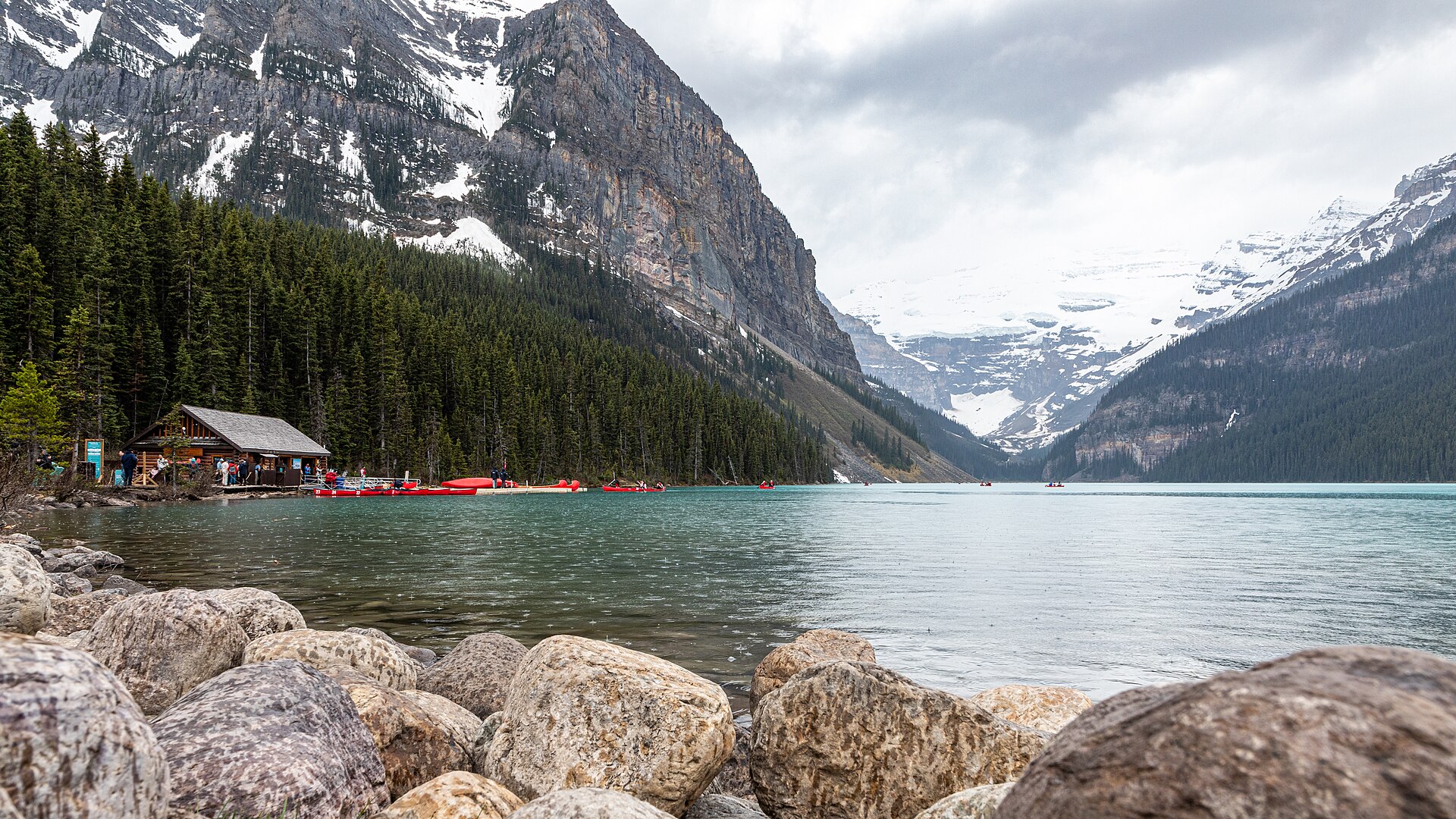

Begin with four kinds of day, not ten trail names
For a first Banff hiking trip, build the visit around contrast. Use one town-area orientation walk, one forest-and-lake outing, one substantial Lake Louise or Moraine objective, and one open-country day if conditions and your experience support it. This is a stronger foundation than selecting five famous lakes whose approaches repeat the same pattern. You learn more about the park when each day has a distinct reason to exist.
A practical starting set is Tunnel Mountain for town orientation, Boom or Taylor for a forest-lake day, Lake Agnes or Plain of Six Glaciers for the Louise area, and Helen Lake or Parker Ridge for a separately planned parkway day. These are choices within categories, not instructions to complete every name. Select the effort that matches your group and treat more demanding pass objectives as replacements, not automatic additions.
Use three geographic clusters
Map these clusters before booking the base. A route's place in a search result does not tell you its place in the park. Boom Lake introduces an additional road distinction: its start is on Highway 93 South near Castle Junction, not the northbound Icefields Parkway. Keeping that small fact clear prevents a trail list from becoming an inefficient driving itinerary.
Swipe the table horizontally to compare every column.
| Cluster | Useful first choices | What should not be assumed |
|---|---|---|
| Banff town and nearby lakes | Tunnel Mountain, Fenland, Johnson Lake, Stewart Canyon | Every short walk fits into one effortless day |
| Lake Louise and Moraine | Lakeshore, Agnes, a Beehive, Larch Valley or Eiffel | All routes are interchangeable because both lakes share a holiday label |
| Icefields Parkway within Banff | Helen Lake, Parker Ridge, selected viewpoints | All parkway trailheads form one compact local area |
The first town day: Tunnel or lower-level walking
Choose Tunnel Mountain if the group wants a definite climb and an overview of Banff within the valley. Add the walk from your actual accommodation to the trailhead rather than using only the summit route's measured portion. Keep the rest of the day modest. A river-level visit afterwards can complement the high perspective without requiring a second large ascent.
If arrival energy or the group's preferences argue against a climb, investigate Fenland and an appropriately selected Bow River section instead. Fenland is a woodland loop with roots, not a perfectly smooth promenade; choose it for close-up forest observation. The purpose of the first day is orientation and an enjoyable shared pace. It does not need to prove how hard everybody can walk.
Choose only one main Louise-side objective per day
Lake Agnes and Plain of Six Glaciers provide different experiences. Agnes makes a forest climb and a second lake central. Plain follows the story of Louise deeper into its mountain valley. If you have two days, that contrast can justify both. If you have one, choose the experience you want most rather than combining them simply to avoid deciding. A connecting circuit is a separate larger route, not the standard version of either outing.
Likewise, Big and Little Beehive are viewpoint choices beyond the Agnes approach. They are not obligatory finishing touches. A shore-level day can instead combine selected Lake Louise Lakeshore walking with Fairview Lookout, if the climb suits the group. Keep Fairview Lookout distinct from Fairview Mountain: the shared name conceals a very different commitment.
Moraine should have its own purpose
For a lighter Moraine visit, Rockpile and a chosen amount of lakeshore walking provide contrasting perspectives without a major mountain climb. Use the designated Rockpile path rather than climbing rocks directly. For a larger day, decide between Lower Consolation, Larch Valley and Eiffel Lake by their character. Consolation supplies forest and another lake basin, Larch supplies a higher larch landscape, and Eiffel supplies a valley-side lake perspective.
Sentinel Pass is a deliberately higher objective beyond Larch Valley. It is not required to make the valley outing complete. Do not treat an arrival at Moraine as permission to choose any of these routes casually. Verify the separate access arrangements directly, then allow enough time for the specific walk and its full return. This guide avoids reproducing bookings or timetables.
A forest-lake day should not duplicate itself
Boom is the clearer candidate when you want a gentler overall climbing pattern, while Taylor emphasises sustained ascent before the lake. Boom still has rough natural surfaces; less climbing does not mean smooth ground. Choose one based on the effort and atmosphere you want, and give the destination pause proper space. Doing both on successive days can be worthwhile if you love that pattern, but it is not necessary for a varied first visit.
Castle Lookout is the useful alternative if a broad Bow Valley view appeals more than another water-level destination. Silverton Falls supplies a much shorter cascade objective but has narrow, uneven and exposed ground. Neither should be described as automatically easy because it is near a road. The comparison should always include the experience and surface, not simply the distance.
A focused three-day first visit
For three walking days, reduce the geographic ambition rather than compressing a week. One coherent Banff-based pattern is Tunnel Mountain on the introductory day, a chosen Louise objective on the main day, and Johnson Lake or Stewart Canyon on the lighter day. This supplies a higher town perspective, a larger mountain or lake journey and a contrasting water-focused outing. It leaves the parkway for another trip rather than spending a short stay chasing a distant ridge because it appears on every best-hikes list.
If staying around Louise, reverse the emphasis. Use one main Agnes, Beehive or Plain of Six Glaciers day; one lighter shore-and-Fairview day; and a separately planned Moraine visit if access and conditions support it. Choose the lighter Rockpile-and-shore combination when you want contrast rather than a second large ascent. A short visit gains more from keeping two areas understandable than from visiting five trailheads whose complete routes you never had time to assess.
For a group that specifically wants open alpine terrain, substitute an appropriately assessed Helen Lake or Parker day for the main outing rather than adding it as a fourth objective inside three days. The substitution changes the geography and effort but keeps the plan honest. A first visit cannot contain every landscape category. The useful question is which one you most want to experience properly, with enough time for the journey and return.
A week with two settled segments
With a week, a Banff segment followed by a Louise segment can reduce repeated movement without requiring a different hotel every night. The Banff portion can hold orientation, one forest-lake outing and lighter local walking. The Louise portion can hold one upper-lake objective and one Moraine choice. A flexible day then accommodates an appropriate parkway outing or a moved main walk. This is a pattern to test against real accommodation and access arrangements, not a claim that a specific service or room will be available.
The move earns its place because it supports more than one morning. If your only Louise priority is a brief waterfront visit, relocating the whole stay may add work without improving the holiday. Conversely, if nearly all the main walks are Agnes, the Beehives and Moraine routes, repeated travel from Banff deserves scrutiny. Compare the everyday start and return for several routes, not one headline attraction. The best base is a practical relationship with the itinerary rather than a universally superior town.
Avoid reserving every day for a major hike simply because the week makes it possible. A rhythm of main walk, lighter contrast and flexible time is more resilient. The group may discover that the forest day was more demanding on uneven ground than expected or that a shore walk deserves longer observation. Use that information to improve the remaining days. An itinerary is useful when it responds to the trip you are having, not when it forces you to defend decisions made before you knew the place.
Five combinations that deserve a second look
These are not prohibited combinations; they are places where a planning shortcut frequently hides the actual day. An experienced group may choose a larger itinerary after researching the whole line. The important distinction is between deliberately choosing a larger route and accidentally creating one through a series of small-looking additions. Use the same honesty when reading a photograph: it identifies a reward but rarely describes all the effort required to reach and leave it.
Swipe the table horizontally to compare every column.
| Tempting combination | Why it can mislead | A clearer plan |
|---|---|---|
| Agnes plus both Beehives plus Plain of Six Glaciers | Several objectives are hidden inside one familiar starting area | Choose one complete route or research the larger circuit deliberately |
| Treeless viewpoint and another full parkway hike | Short route names conceal travel and high-country effort | Assign one anchor walk and select modest complementary stops |
| All Moraine routes after the iconic photograph | Shared access does not make the branches one outing | Choose shore, forest lake, valley or pass as the primary purpose |
| Boom as an Icefields Parkway stop | Highway93 South and93 North are different corridors | Place Boom in the Castle Junction geographic cluster |
| Sulphur ascent with an assumed free descent | A past anecdote is not a verified service arrangement | Resolve the complete return before leaving |
Choose the lowest common terrain comfort, not a shared fitness label
Mixed-ability planning becomes easier when you ask concrete questions. Does everyone enjoy roots and rocks? Is a sustained descent comfortable? Is an open slope welcome, or does the group prefer forest? Two people who both describe themselves as fit may give different answers. Fenland reduces climbing but retains roots. Silverton is short but narrow and exposed in places. A lake circuit such as Johnson has steps and natural ground. None can be selected accurately from distance alone.
Use those distinctions to choose the common objective rather than treating the strongest walker’s preference as the default. If the shared goal is time beside water, the Louise or Moraine shore may be the right experience to investigate. If everyone enjoys a full uphill day, the Agnes or Sulphur alternatives become relevant. If one person wants a pass and another wants a gentle lake visit, the honest solution may be separate deliberately arranged days, not reassurance that the difference will disappear once walking begins.
Agree where the day ends before departure. A viewpoint, lake or pass should be a shared objective with a clear return, not the first item in a sequence the group will renegotiate while tired. This is particularly important above Larch Valley or Agnes, where the next visible destination can exert pressure to continue. A completed shorter plan is a better outcome than an unplanned larger outing in which somebody feels unable to say they have had enough.
Keep the route card practical and small
For each chosen day, record the exact start, the named endpoint, the return shape and one suitable alternative. Add the official page from which the map and figures were taken. Do not crowd the card with every possible nearby trail. The aim is to make the actual decision clear: for example, Lake Louise to Agnes and back, rather than tea-house adventure with unspecified Beehives. A route title should function as a boundary as well as an invitation.
Record what you have excluded too. A Helen card can state no Cirque Peak extension; an Eiffel card can state no Wenkchemna Pass continuation; a Stewart card can state bridge and return rather than the longer Minnewanka system. This is not unnecessary caution. It prevents an attractive nearby name from changing the day's purpose without the same research given to the original plan. Keep genuine options available, but make each a complete understood outing rather than a fragment borrowed from another guide.
Give the parkway one anchor walk
Helen Lake belongs in a plan that allows a substantial forest-to-meadow outing. Parker Ridge is more compact but high and open, with a different northern location and glacier panorama. Choose one principal walk for a travel day, then select other stops sparingly. A list of lakes and viewpoints can already occupy considerable time before any hiking is added. Do not make a scenic corridor into a race between car parks.
The Banff portion and a full journey into Jasper are different scopes. If you continue north, account for the road journey independently rather than borrowing a Banff walking-day schedule. A glacier visible from a ridge remains a view, not an invitation to approach the ice. Keep the ordinary walking objective distinct from adjacent technical mountain activities.
An effort sequence that actually works
Arrange the selected days as orientation, main walk, lighter contrast, second main walk and flexible option. For example, Tunnel followed by a Louise objective, then Fenland or Johnson Lake, then a forest-lake day creates a more forgiving rhythm than four sustained ascents in succession. Move the most condition-dependent outing within the available period rather than assigning an inflexible high-country destination to one date months ahead.
Check current official reports for every selected route. This plan is not a promise of summer ground, access or suitability. Its practical value is that each day already has a named purpose and a contrasting alternative. Remove an objective when it no longer fits instead of forcing the itinerary to remain unchanged. A first Banff visit succeeds through a few coherent days, not through completing the largest possible collection of famous trail titles.
Questions answered
How many major hikes should I plan for a week?
Use a few main walking days separated by lighter contrast and flexible time. The exact number depends on your routes and experience; do not treat every available day as a maximum-effort slot.
Should I combine Lake Agnes, both Beehives and Plain of Six Glaciers?
Not by default. They create different objectives and combinations. Choose the full route deliberately rather than stacking every nearby name onto one day.
Sources & scope
Route facts are drawn from the resources below. The comparisons and recommendations are our research-based editorial analysis; this is not a claim of personal trail inspection. Access and conditions must be checked with the responsible land manager before travel.
- Parks Canada: geographic hiking directory
- Official tourism: Lake Louise route choices
- Official tourism: Moraine route choices
Editorial standards · Explore the destination guides
Found a detail that needs correcting? Send the guide URL and a supporting source so we can review the exact route version.