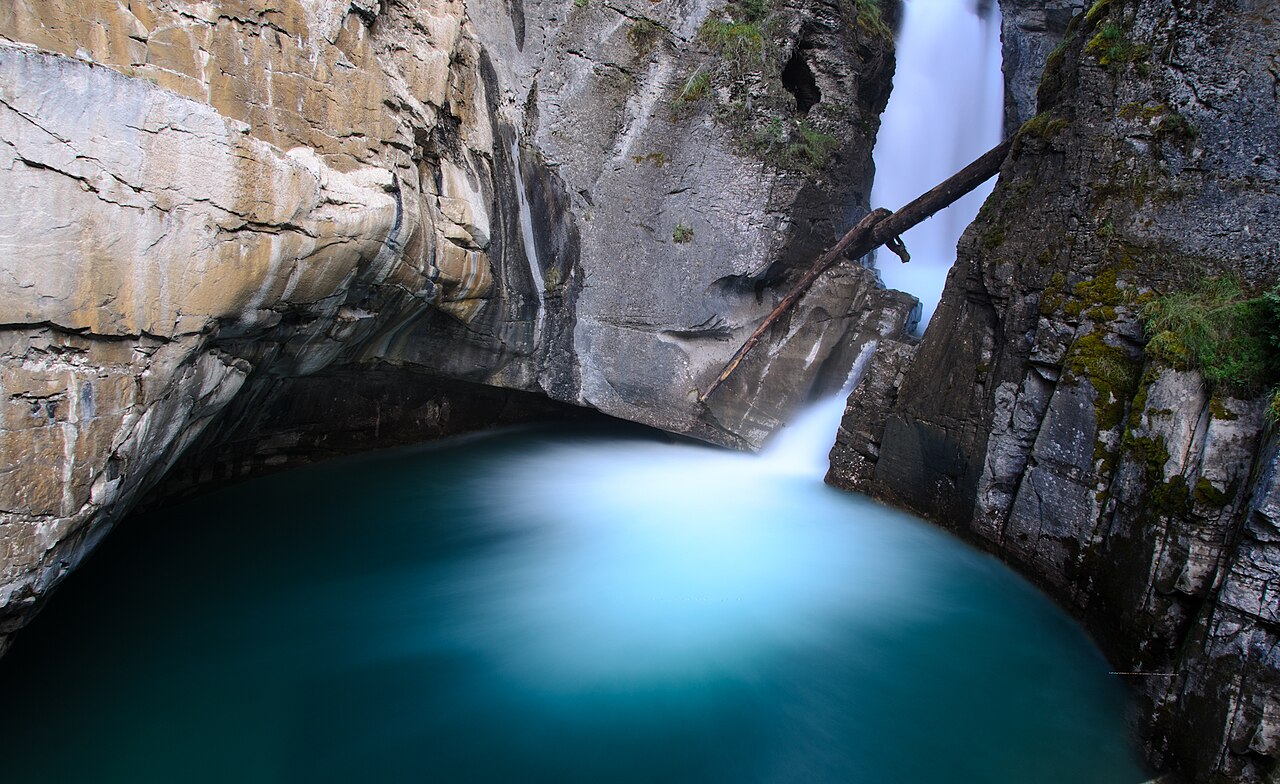

Choose an endpoint within one canyon walk
Lower and Upper Falls belong in one Johnston Canyon decision rather than being treated as unrelated hikes. Lower Falls offers a more compact introduction to the canyon; Upper Falls extends the same experience and adds a different waterfall perspective. Choose the endpoint that matches the complete day you want. There is no requirement to continue simply because the path does. Equally, reaching Lower Falls need not be the end if the larger canyon outing was your assessed plan from the beginning.
The Ink Pots are a different question. Continuing beyond the waterfall area takes the day towards a meadow destination rather than merely another canyon viewpoint. Research that full outing separately. It should not be presented as a small bonus attached to an otherwise short waterfall walk, because the return commitment and the landscape you are choosing both change.
What the constructed route actually supplies
The canyon's built paths and catwalks make a particular relationship with the water possible: you move beside the walls and look into the confined channel. They do not turn the outing into an ordinary level town pavement. Slopes, uneven places, narrow sections and passing other visitors still shape the experience. A constructed surface is one property of the path, not a complete statement about difficulty or individual access.
This matters for groups that assume paved means effortless. Read the current detailed route information for the actual ground and gradient rather than making that shortcut. If a member of the party needs a specific surface or width, resolve that question with official information. Do not use a broad family-friendly description as a substitute for understanding the route they will actually follow.
Lower Falls: a complete short canyon objective
Choose Lower Falls when you want to experience the canyon and a defined waterfall destination without making the longer climb the purpose of the day. The interest begins before the waterfall: the channel, rock walls and changing proximity to water supply a sequence of views. Slowing down through that sequence can make the shorter outing richer than hurrying to the first destination and immediately asking what comes next.
For a mixed group, a shared Lower Falls plan can be clearer than an unspoken expectation that the more enthusiastic walkers will persuade everyone to continue. Agree the intended endpoint and pace before the start. If the group wants different amounts of walking, choose arrangements deliberately rather than splitting casually on a narrow path without a coherent meeting and return plan.
Upper Falls: more of the canyon, not a new trip
The Upper Falls option suits someone who wants a longer encounter with the same canyon landscape. Its value is not simply that upper sounds more impressive. You spend more time following the water and gain another perspective within the route. That makes sense when the canyon itself interests you and the complete return fits your group. It is less compelling when you mainly want a brief waterfall photograph before another substantial hike.
Do not count only the additional outward section. Everything beyond Lower Falls must also be included in the return. Viewpoint stops and moving past other visitors can add time without adding distance. A plan based solely on a minimum walking estimate is therefore fragile. Give the route enough space to feel like the scenic outing you intended rather than a queue of destinations that must be reached on schedule.
Three choices with different purposes
The official Lower Falls line is 1.1 kilometres one way, with 85 metres of ascent and 55 metres of descent; its return estimate is one hour. Upper Falls is 2.4 kilometres one way, with 215 metres of ascent and 125 metres of descent, estimated at two hours return. On the same retraced corridor, that means 2.2 versus 4.8 kilometres of walking before extended pauses. Choose Lower for the compact canyon visit; choose Upper when the fuller canyon sequence justifies roughly twice the listed walking allowance. Neither total includes the longer Ink Pots day. Current official notices still decide whether the selected route can be used.
Swipe the table horizontally to compare every column.
| Endpoint | Main appeal | What you are choosing |
|---|---|---|
| Lower Falls | A compact introduction to the canyon | A shorter waterfall-centred outing |
| Upper Falls | A fuller canyon walking experience | More walking within the same landscape |
| Ink Pots | An onward meadow destination | A distinct longer route beyond the waterfalls |
Do not improvise a canyon-level photograph
Stay with the designated route and appropriate viewpoints. The attraction is the way the path provides views into the canyon; it does not require descending towards the stream or standing on rocks outside the walking line. Photographs that conceal the camera position cannot establish a suitable access route. Water and wet rock create a different setting from the constructed walkway, and no such detour is recommended here.
Share narrow places considerately. Stop where it is appropriate rather than blocking movement to reproduce an image. A canyon view changes with water, light and conditions, so the aim is to observe the real scene rather than force it to match a previous photograph. That approach also reduces the pressure to move beyond a boundary for a more dramatic foreground.
Separate the permanent choice from current access
Johnston Canyon can be affected by maintenance closures and other restrictions. The current official report must determine whether your chosen route is available on your date; this guide is not a reopening bulletin or confirmation of access. Do not treat a well-established tourist route as immune from those changes. If it is unavailable, select another independently assessed outing instead of seeking an unofficial bypass.
The lasting planning decision remains useful: choose Lower for a compact canyon experience, Upper for a fuller version of it, and Ink Pots only as a separately understood longer day. Keep the endpoint clear, account for the whole return, and let the canyon's sequence of views supply the interest rather than adding unnecessary destinations.
Questions answered
Are Lower Falls and Upper Falls separate hikes?
They are endpoints along the same canyon route. Choose how far you intend to go and include the complete return.
Does this page confirm the canyon is open?
No. Consult current Parks Canada reports and bulletins. Maintenance and other restrictions can affect the route.
Sources & scope
Route facts are drawn from the resources below. The comparisons and recommendations are our research-based editorial analysis; this is not a claim of personal trail inspection. Access and conditions must be checked with the responsible land manager before travel.
- Official tourism: Johnston Canyon route structure
- Parks Canada: canyon route details and current bulletins
Editorial standards · Explore the destination guides
Found a detail that needs correcting? Send the guide URL and a supporting source so we can review the exact route version.